Idea
QA can participate from the very beginning, attending requirement discussions and early design sessions. Our team identifies potential risks, technical challenges, and gameplay issues that may arise later. Early QA involvement helps mitigate costly mistakes before development begins, a practice commonly used in AAA studios.
Requirements Analysis
We review the requirements for clarity, completeness, and feasibility. Any missing or ambiguous elements are flagged, ensuring that developers and designers are aligned. This step reduces rework later in production and ensures a smoother workflow, especially for external development teams handling complex pipelines.
Design Phase
QA reviews the Game Design Document (GDD) to verify consistency and feasibility. At this stage, the test strategy is defined, and documentation is prepared for future testing phases. Defining how the game will be tested early helps external QA teams integrate seamlessly with internal pipelines.
Development
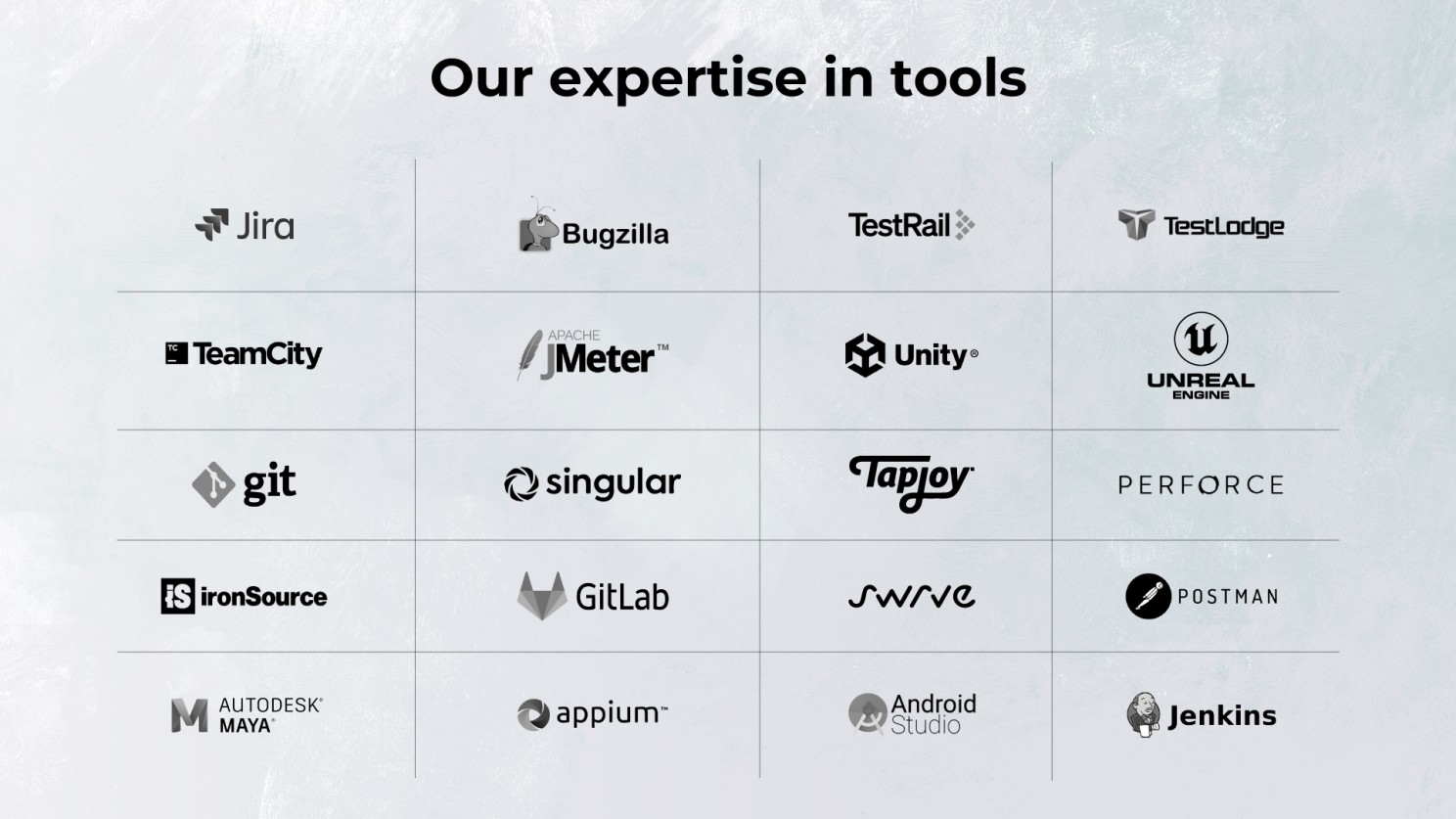
During development, QA runs early testing rounds in collaboration with developers, including unit tests, integration tests, and smoke testing. We support CI/CD pipelines across different environments, ensuring new builds are stable and functional. QA at this stage reduces bottlenecks during later testing phases.
Note: From the next stage, Quality Control (QC) is included to check asset compliance and functional correctness.
Testing Phase
QA executes functional, non-functional, and exploratory tests. Issues are logged and tracked using standard bug-tracking tools. Fix verification is critical here. External development QA teams often complement internal QA by providing fresh perspectives and additional resources, speeding up testing timelines.
Optimization (Playtest)
Regression testing and playtests focus on performance, stability, and gameplay feedback. QA identifies optimization bottlenecks, frame rate drops, memory leaks, and other performance issues. This stage is crucial for ensuring the game meets AAA standards on all target platforms.
Pre-launch (Playtest)
Final tuning and polish are performed, including bug verification, balancing, and final optimization. QA works closely with developers to prepare the game for launch, ensuring that no critical issues remain.
Release
QA runs acceptance tests and validates the release build. We support release readiness, deployment processes, and post-release monitoring plans, ensuring the game launches smoothly.
Support
Post-launch, QA monitors player feedback, live performance, and metrics. We assist with hotfixes, patches, and quality improvements. In AAA studios and external development pipelines, continuous QA involvement post-launch is key to maintaining player satisfaction and preventing negative reviews.
Involving QA from the earliest stages and throughout the development process is critical for delivering high-quality, polished games. At ENTANGLED Studio, our QA team ensures that internal and external pipelines run smoothly, projects meet deadlines, and players enjoy the best possible experience.
We’ve prepared a comprehensive checklist covering all stages of QA — download it here.